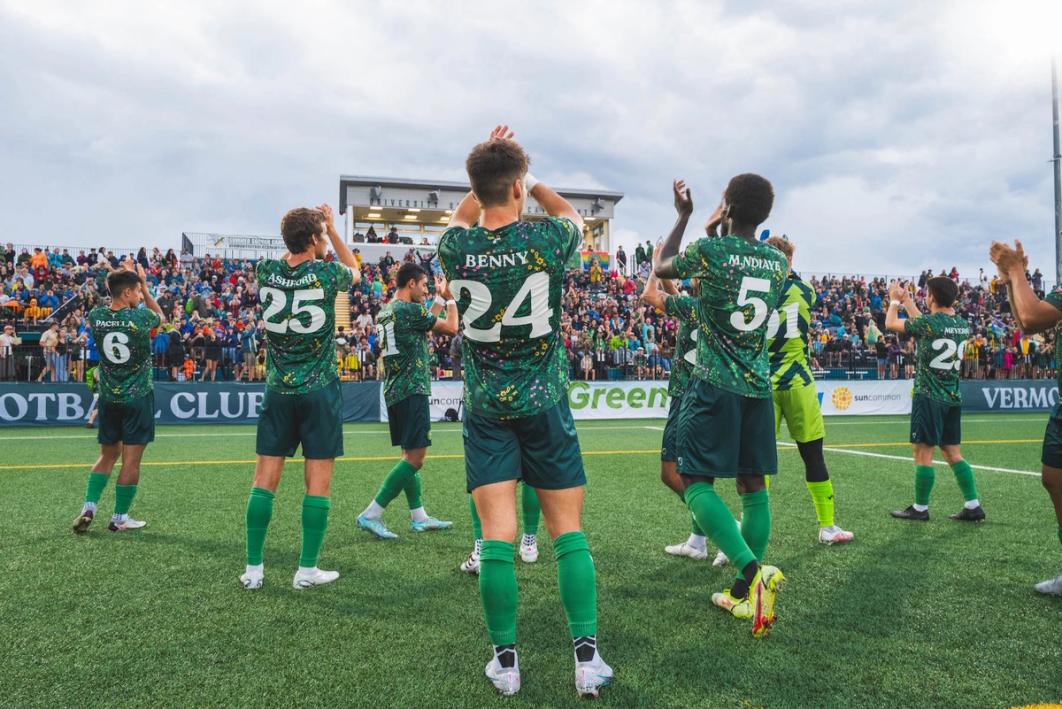
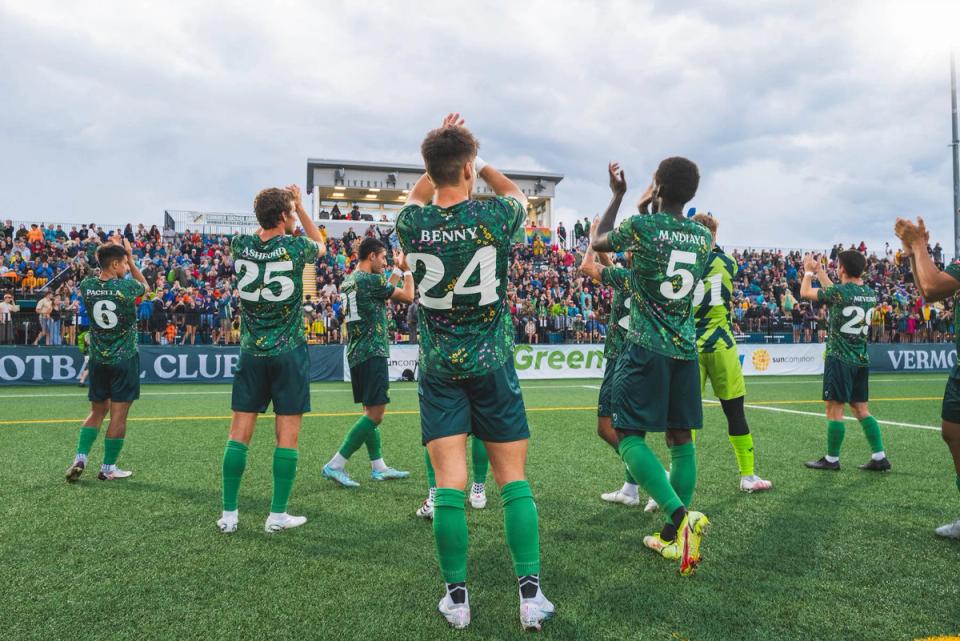
Ashford echoed his head coach’s thoughts. The defender has played at both the top college and USL League Two level and always takes time to look up in the stands during a game.
“[The fans] have their phones down and they're actually engaged in watching the games. From the kids all the way up to the oldest people there,” said Ashford. “That's not something I feel like you see very often anymore and…it just makes it that much more worthy of playing as hard as you can.”
Doing Soccer ‘Different’
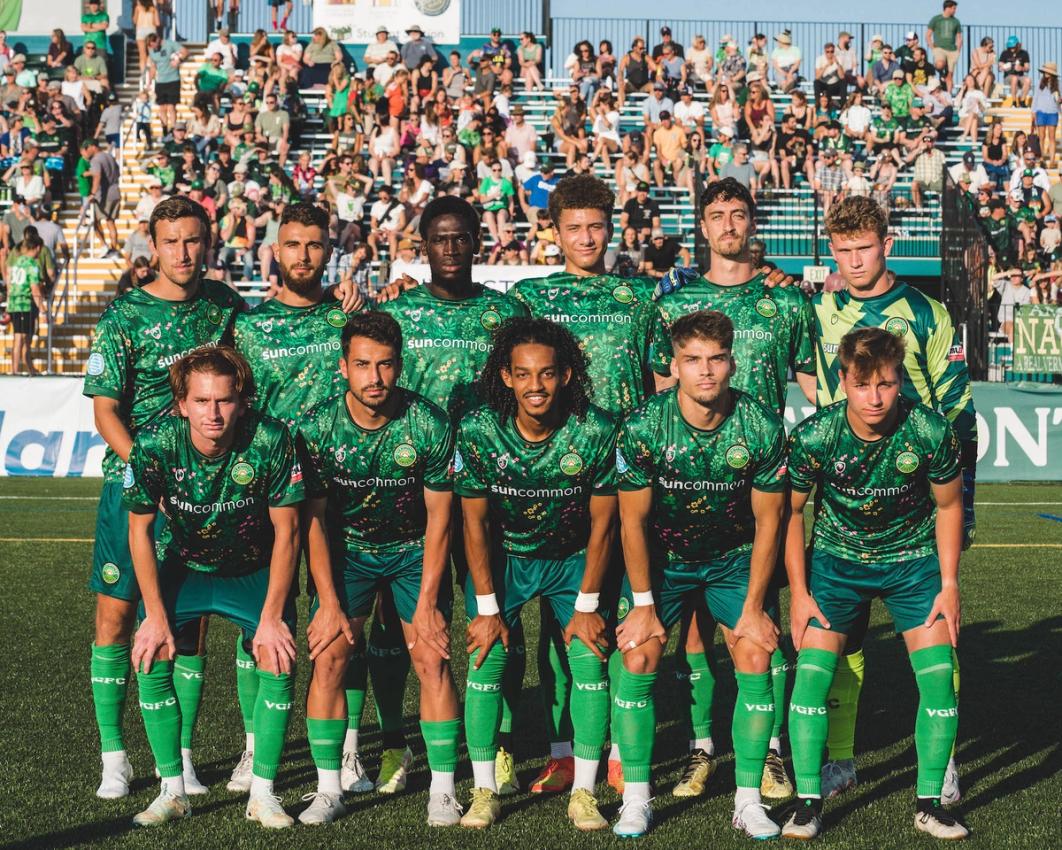
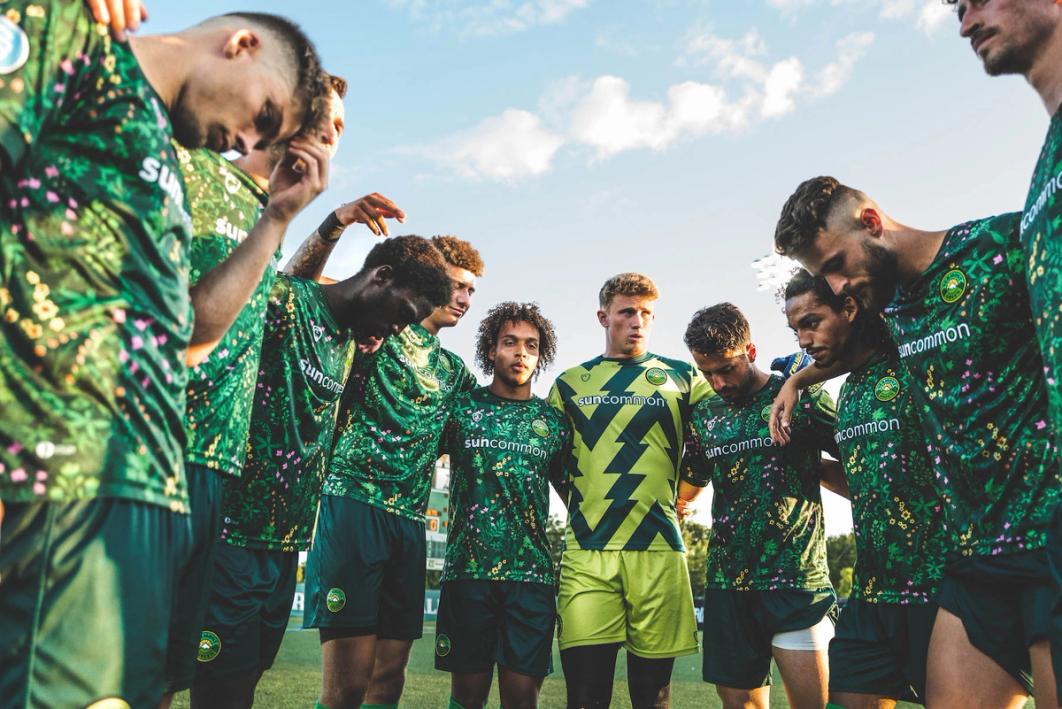
Many soccer teams have causes they support, especially around environmental protection. Only Vermont Green has its entire identity based around an eco-friendly stance.
If you ask Matthew Wolff, one of the team’s co-founders, he would say he has the greatest job in the world. The graphic designer, whose resume includes creating brands for teams like New York City FC in Major League Soccer and the universally acclaimed Oakland Roots SC of the USL Championship, has had a front row seat in the development of team identities – the things that form connections between a fanbase and organization.
And as the COVID-19 pandemic wore on, the idea began to form in his head about making his own football club.
“One that was more mission driven,” Wolff explained. “I'm deeply concerned about the future of our planet and the people on our planet. And my work experience is in football so I wanted to kind of see if there was an opportunity to marry those two things.”
Green FC aims to become a net zero emissions entity, and every decision it makes goes through an environmental justice lens. Everything from how merchandise is produced to how players get to games. In 2022, the team joined One Percent for the Planet, an international organization whose members contribute at least one percent of their annual revenue to environmental causes.
The team’s causes don’t just stop at the environment. Social platforms such as anti-racism and equality are also high on the team’s priority list.
These values have directly contributed to the companies Green chooses to work with – including fellow Vermont business and social justice sponsors Ben & Jerry’s ice cream.
In the stands, Littwin says the entire cause has had a direct impact on the community. From seeing more fans noticing their environmental footprint to seeing organizations and figureheads using the influence of the club to help push change.
“[We’re] raising awareness around certain issues and getting people plugged into resources and getting folks connected with organizations that can help them,” said Littwin. “If you think about Vermont Green as being sort of like this nexus that connects all these distinct parts of Vermont, they are extremely successful at that.”