On the Pitch
On the Pitch
On the Pitch
Open Cup
On the Pitch
26 USMNT Moments, Past to Present: The Rise, Fall and Lasting Impact of the NASL
How the North American Soccer League reached unprecedented heights before its untimely collapse
This is 26 USMNT Moments: Past to Present, a U.S. Soccer content series that covers 26 defining moments in U.S. Men's National Team history. From inspired victories to stunning goals, and the stars and hidden heroes who made them possible, each chapter reminds us that our dreams on the pitch are worth chasing. Together, they’ve built toward the biggest moment yet: the 2026 World Cup on home soil.
Following a period of rapid growth at the turn of the 20th century, soccer in the United States faced a period of uncertainty midway through the century. The once dominant American Soccer League (ASL) had been reduced to a largely semi-professional, hyper-local league as the average American’s interest in soccer waned, the U.S. Men’s National Team was in the midst of a 40-year FIFA World Cup drought, and the sport took a distant backseat to other emerging and established sports leagues such as Major League Baseball (MLB), college football and the dueling American Football League (AFL) and National Football League (NFL).
Despite a handful of positive developments in the sport in the late 1950s and early 1960s—namely the growing influence of college soccer and the short-lived International Soccer League (ISL)—there remained a clear void where a true coast-to-coast professional soccer league should exist.
Attempting to capitalize on the opportunity and momentum following the 1966 FIFA World Cup, a pair of professional leagues emerged in the United States in 1967. The first league, the FIFA and U.S. Soccer-sanctioned United Soccer Association (USA), was launched by Los Angeles Lakers and Los Angeles Kings owner Jack Kent Cooke alongside AFL founder and Kansas City Chiefs owner Lamar Hunt and featured imported European and South American teams. Alternatively, ISL founder Bill Cox and MAC Hermann Trophy namesake Bob Hermann started the unsanctioned National Professional Soccer League (NPSL) at the same time.
After just one completed season apiece, the USA and NPSL merged on Dec. 7, 1967, and the North American Soccer League (NASL) was born. The first NASL season kicked off in 1968, pitting 17 teams—a combination of the USA, NPSL and new clubs—against each other in the league’s inaugural campaign. The Atlanta Chiefs—owned and operated by baseball’s Atlanta Braves—won the first league title thanks to a pair of clean sheets in both legs of the NASL Final from longtime Crystal Palace goalkeeper and NASL All-Star Vic Rouse.
Through the late 1960s and early 1970s, the NASL struggled to maintain any momentum it garnered in its inaugural season. After the first season, 12 of the 17 founding clubs folded, and between the 1969 and 1973 seasons, the NASL fielded no more than nine teams each season. Even with new teams emerging in new markets over the first few years of the league—specifically the New York Cosmos in 1971—the NASL struggled to break an average match attendance of 5,000.
On the brink of extinction, the league turned a corner in a big way in the mid 1970s. Between 1973 and 1975, fewer teams were folding and key expansion teams emerged: the Philadelphia Atoms in 1973, the Los Angeles Aztecs, San Jose Earthquakes, Seattle Sounders and Washington Diplomats in 1974, and the Chicago Sting, Portland Timbers and Tampa Bay Rowdies in 1975. Only a handful of years removed from an untimely demise, the league entered an unprecedented period of prosperity.
The Tampa Bay Rowdies taking on the Portland Timbers in Soccer Bowl '75 on August 24, 1975 at Spartan Stadium in San Jose, Calif.
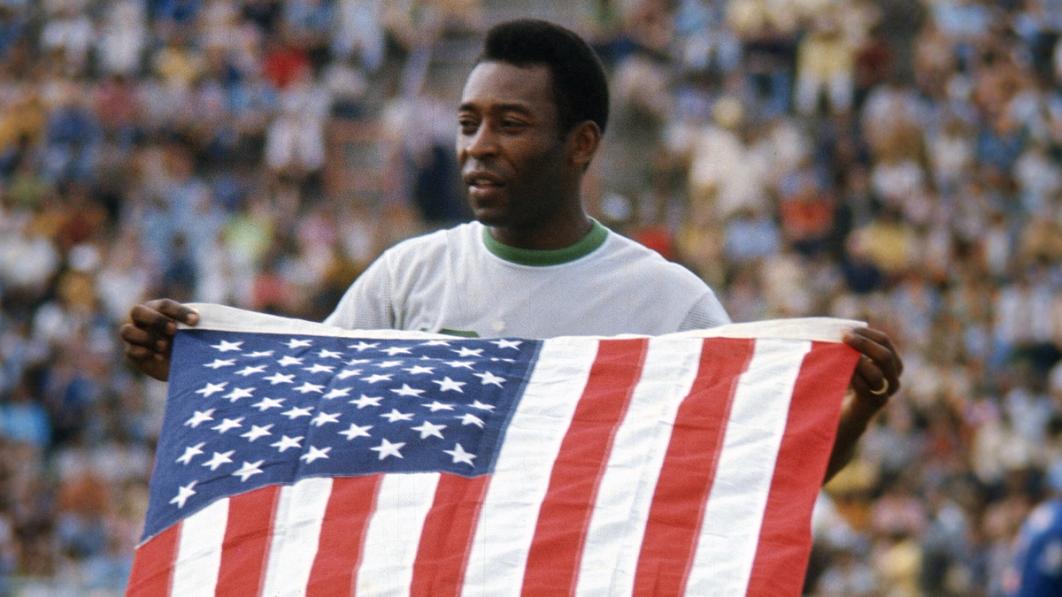
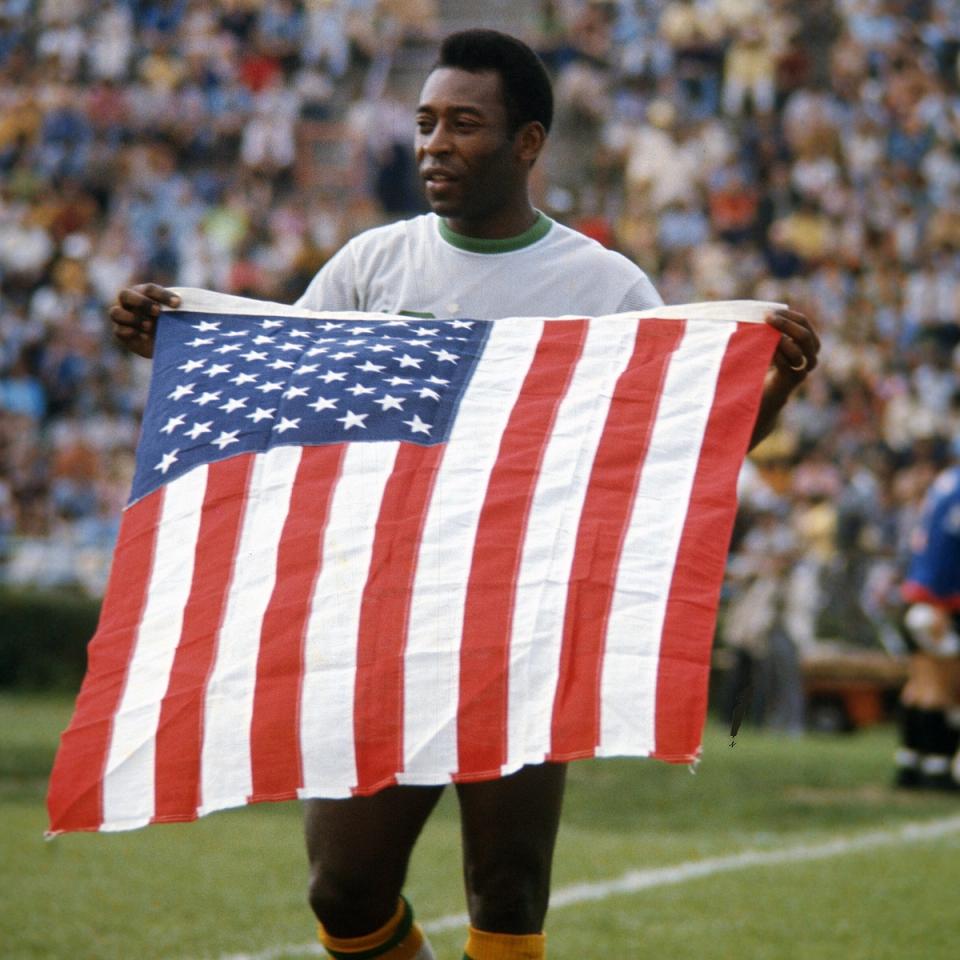
That rapid growth was only exacerbated in 1975, as the New York Cosmos lured global superstar Pelé to the Big Apple. A three-time FIFA World Cup champion with Brazil, the Santos FC legend was lured out of partial retirement by a lucrative Cosmos contract. Like the Messi Mania experienced in Major League Soccer (MLS) today, Pelé’s arrival helped stabilize the NASL and drive more mainstream interest in both the league and the sport across the country.
Pelé starred for the Cosmos for three seasons between 1975 and 1977, making 107 total appearances and scoring 66 goals for the club. The Brazilian icon led the Cosmos to the 1977 Soccer Bowl title, but more importantly, set a standard for other global stars to join the NASL, in turn sparking a massive increase in fan interest.
West Germany and Bayern Munich defender Franz Beckenbauer joined Pelé in 1977, ultimately helping the Cosmos to three Soccer Bowl titles; Ajax, FC Barcelona and Netherlands legend Johan Cruyffspent time with the Los Angeles Aztecs and Washington Diplomats; former Manchester United goalscorer George Best brought his attacking prowess to the Los Angeles Aztecs, Fort Lauderdale Strikers and San Jose Earthquakes; and FIFA World Cup, UEFA Champions League and Ballon d'Or winner Gerd Müller concluded his decorated career with a trio of seasons with the Fort Lauderdale Strikers. Other legends to grace the NASL pitch at the height of its popularity included Bobby Moore, Eusébio, Carlos Alberto, Johan Neeskens and Giorgio Chinaglia.
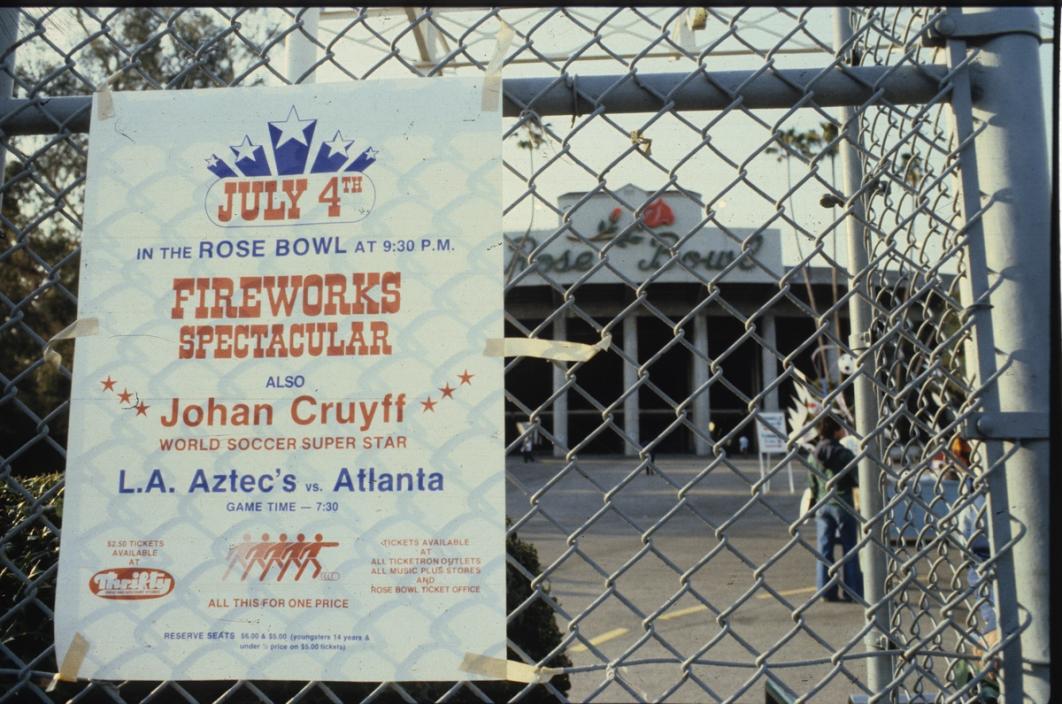
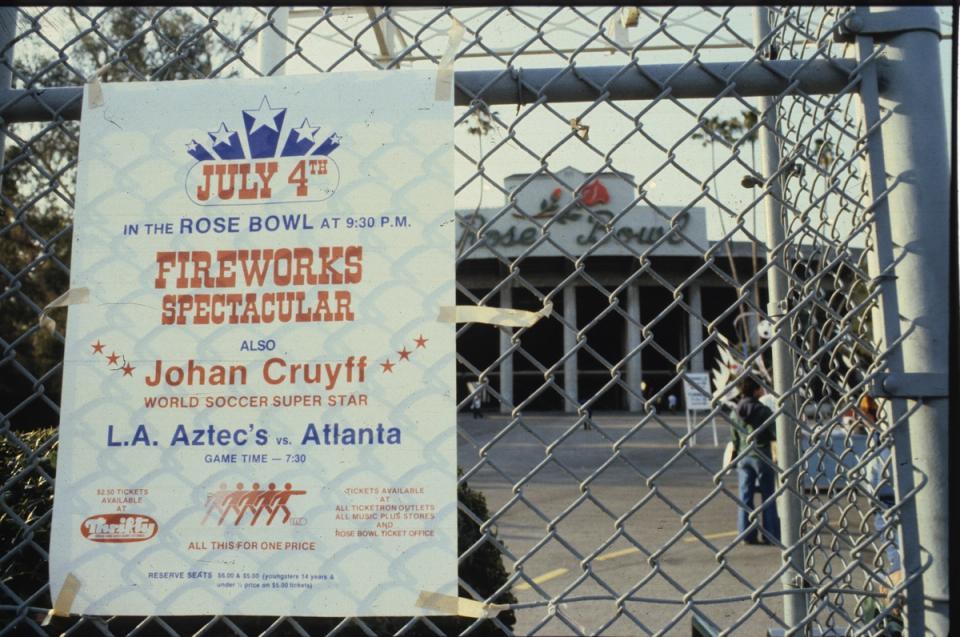
Announcement of the match between the LA Aztecs and the Atlanta Chiefs
The influx of these global superstars had a direct impact on both television viewership and match attendance. In addition to a collection of high-performing local televisions deals in New York, Seattle, Vancouver and Tampa, the league was featured nationally on CBS, ABC and ESPN, allowing it to reach new audiences. The most visible evidence of the league’s growing influence, however, was the number of fans in the stands.
After struggling to manage more than 5,000 fans per match in the first few seasons of its existence, the NASL—bolstered by the arrival of world-renowned icons and increased national coverage—rivaled attendance figures of other major leagues in the United States. The NASL averaged over 10,000 fans per match in every season between 1976 and 1984, peaking in the late 1970s, and enjoyed dozens of matches with attendances well over 50,000 during that period.
The NASL record—a crowd of 77,691 that packed into Giants Stadium to witness an 8-3 postseason thrashing by Pelé’s Cosmos against the visiting Fort Lauderdale Strikers—stood as the single highest-attended domestic club match in the United States until an ElTráfico clash between LAFC and the LAGalaxy drew 82,100 at the Rose Bowl in 2023. Notably, the Cosmos were involved in 23 of the top 25 highest-attended NASL matches—with the top nine all taking place at Giants Stadium. Aside from the Cosmos, the Seattle Sounders, Vancouver Whitecaps and Tampa Bay Rowdies also enjoyed consistently impressive crowds.
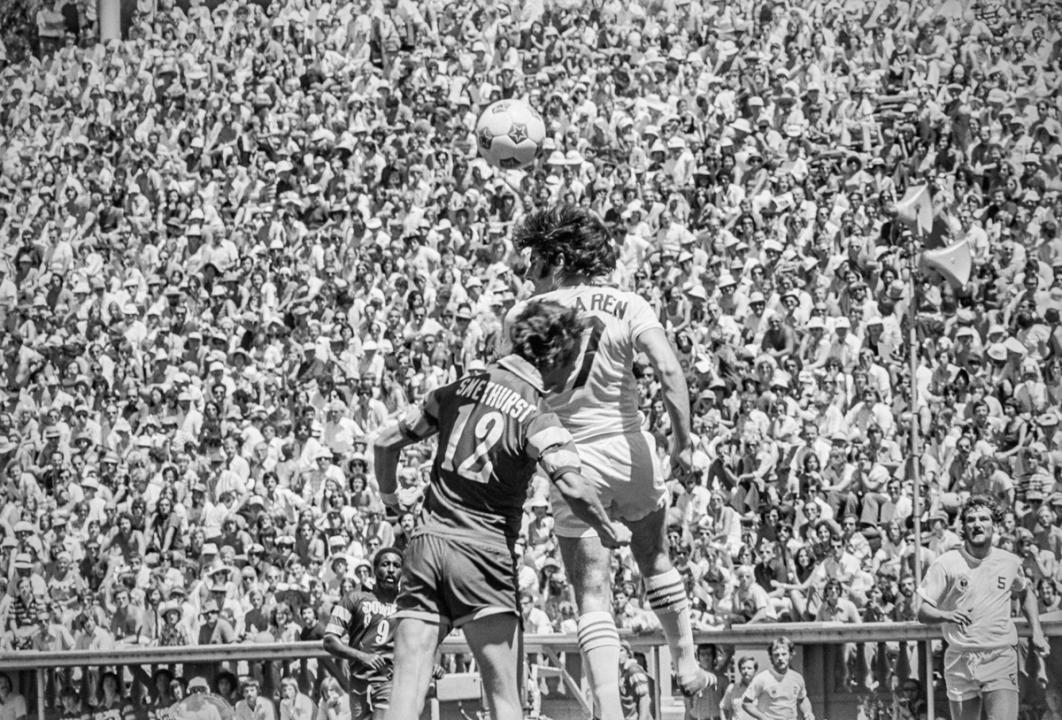
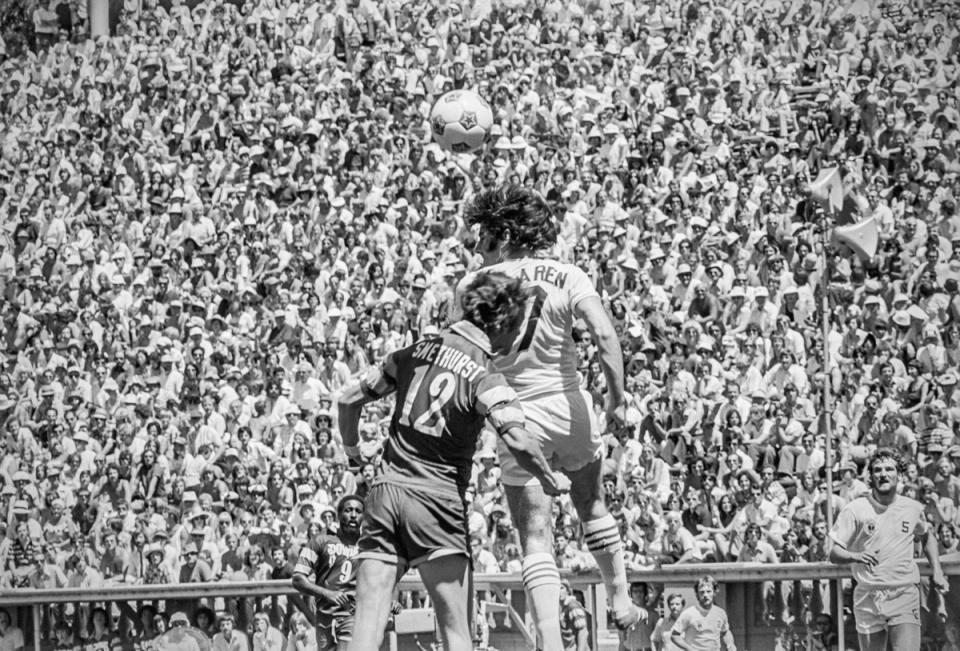
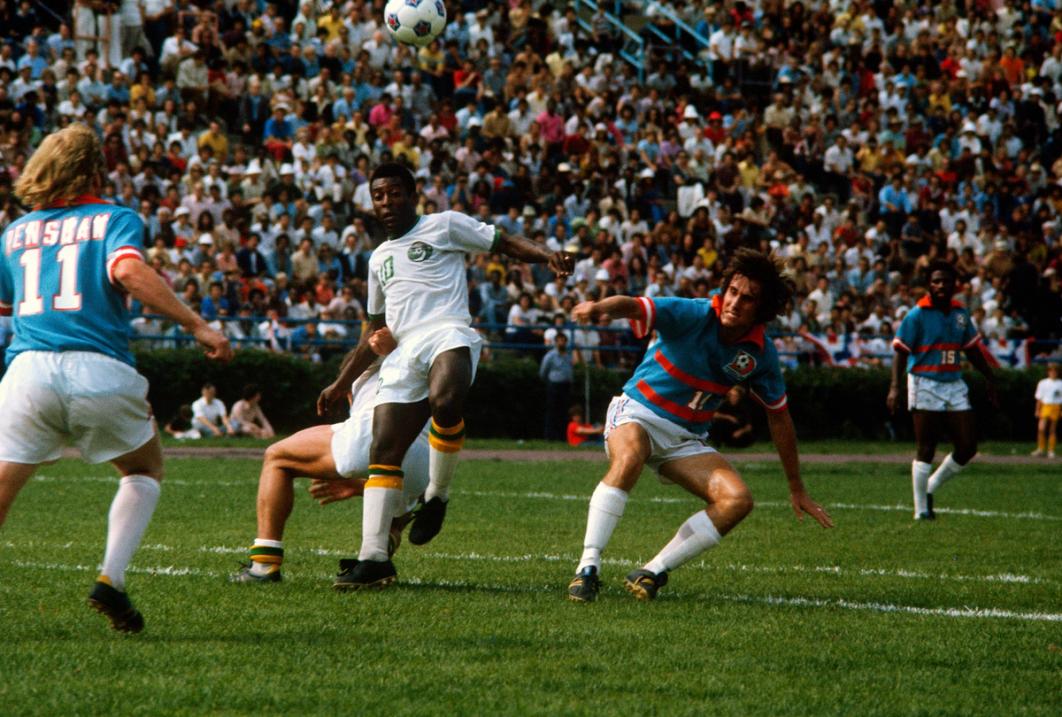
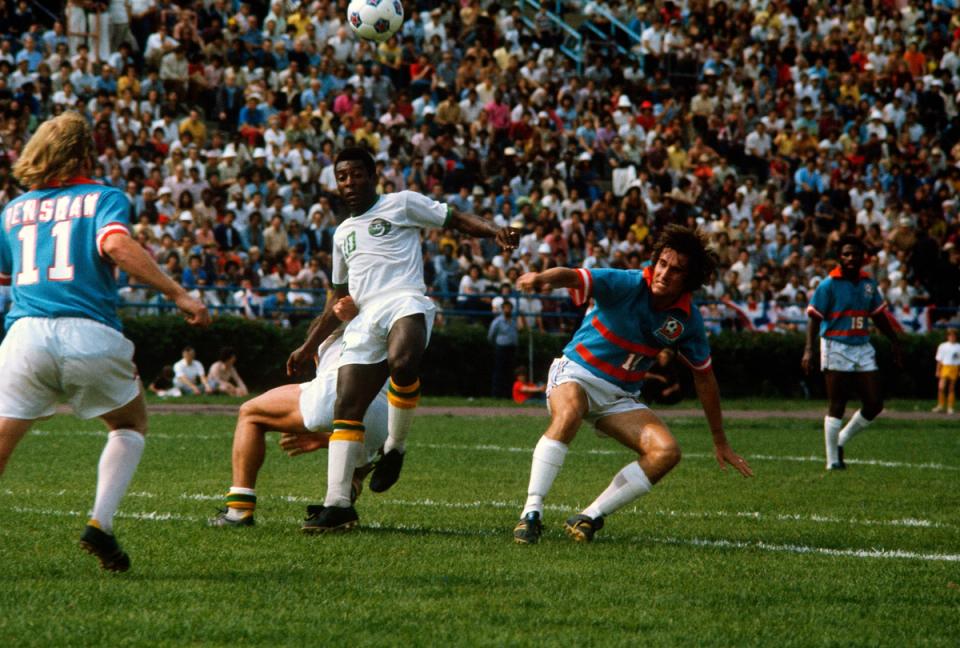
The New York Cosmos' Pelé against the Dallas Tornados on June 15, 1975 at Downing Stadium in New York City
The league was riding high into the 1980s. Though Pelé was retired in 1977, the NASL was enjoying its most substantial and fruitful stretch in terms of both attendance numbers—averaging nearly 15,000fans per match each season—and number of teams—holding steady around 24 teams. Despite the recent successes, the league was faced with a collection of urgent issues as the decade unfolded. Overexpansion into markets not ready to support a fully-fledged professional team, unsustainable spending on star players, dwindling attendance following Pelé’s retirement, and national broadcasters opting for more NFL, MLB and NHL coverage in place of NASL matches plagued the once-thriving league in the early 1980s.
By 1984, the league was reduced to nine teams—down from 24 at the start of the decade—and before the 1985 campaign, NASL suspended operations as only two clubs were able to field teams. While there were plans to resume operations in 1986, those never came to fruition, and the star-powered, era-defining soccer league was shuttered for good.
With the NASL gone, other leagues were able to step up and thrive in its absence. Several former NASL clubs shifted to indoor soccer, joining the Major Indoor Soccer League (MISL), and other major outdoor leagues cropped up in the NASL’s absence over the next decade; an early United Soccer League (USL) predecessor began play in 1986 and MLS kicked off in 1996.
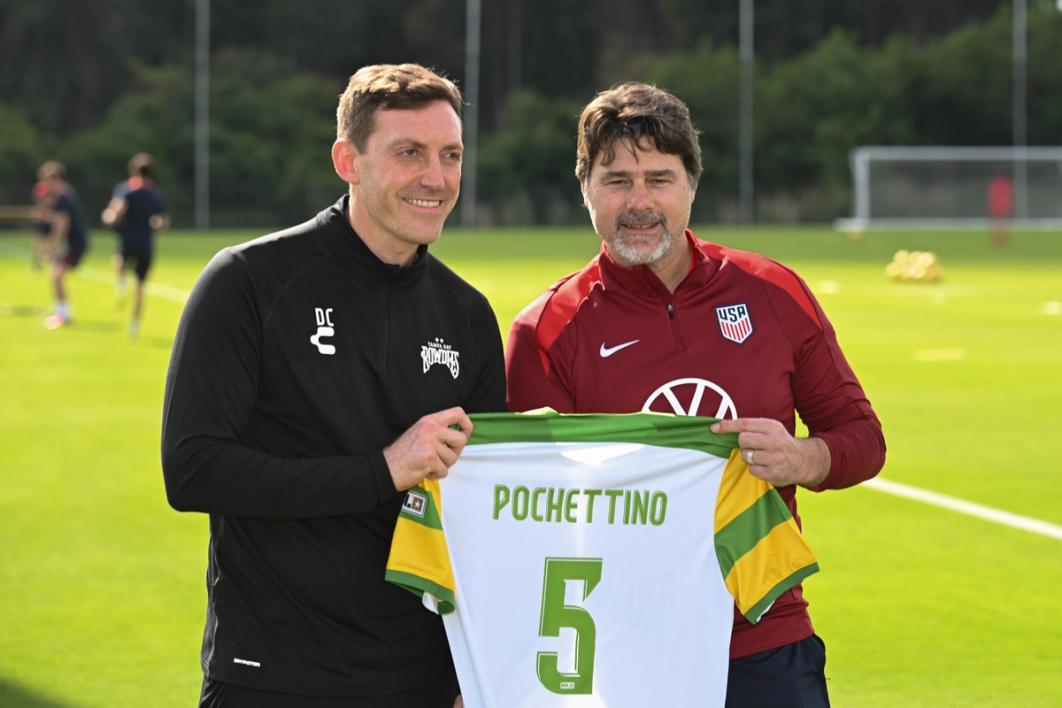
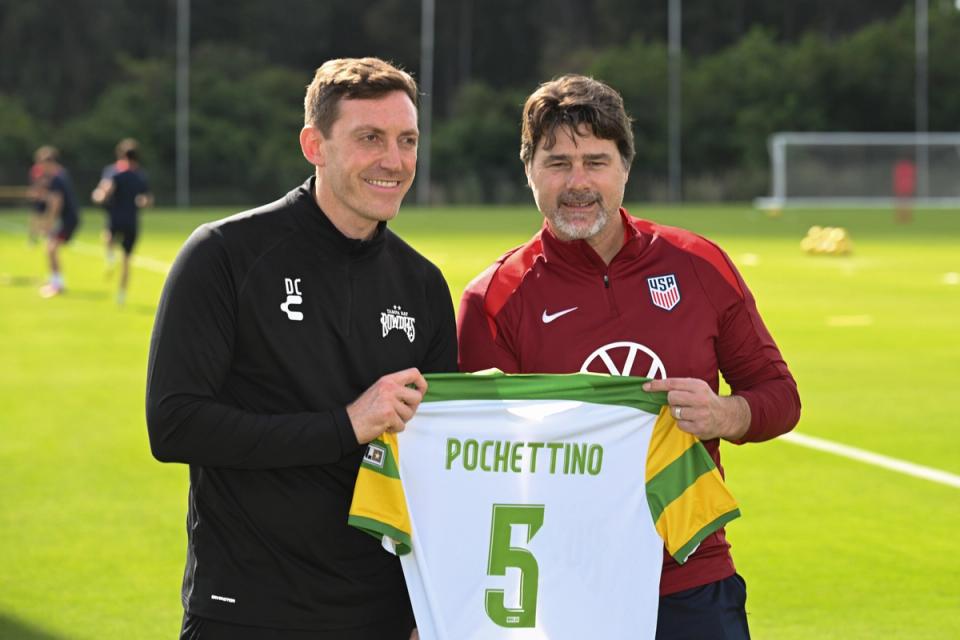
Tampa Bay Rowdies head coach Dominic Casciato presents USMNT head coach Mauricio Pochettino with a jersey during training the day before playing Uruguay in an international friendly in Tampa, Fla. in 2025
It’s now been over 40 years since the last match in the original NASL. Even though four decades have passed and all levels of soccer—men’s, women’s, amateur, professional, indoor, outdoor—have continued to thrive in the United States, the impact of the league is still evident to this day. The iconic New York Cosmos launched a third iteration of the team in the third-division USL League One this season, the Tampa Bay Rowdies currently sit atop the Players’ Shield standings in the second-division USL Championship, and in the top-flight MLS, Vancouver Whitecaps FC and the San Jose Earthquakes are pushing for the Supporters’ Shield, while Seattle Sounders FC and the Portland Timbers are vying for a return to the MLS Cup Playoffs.